TOOL AND MATERIAL SELECTION
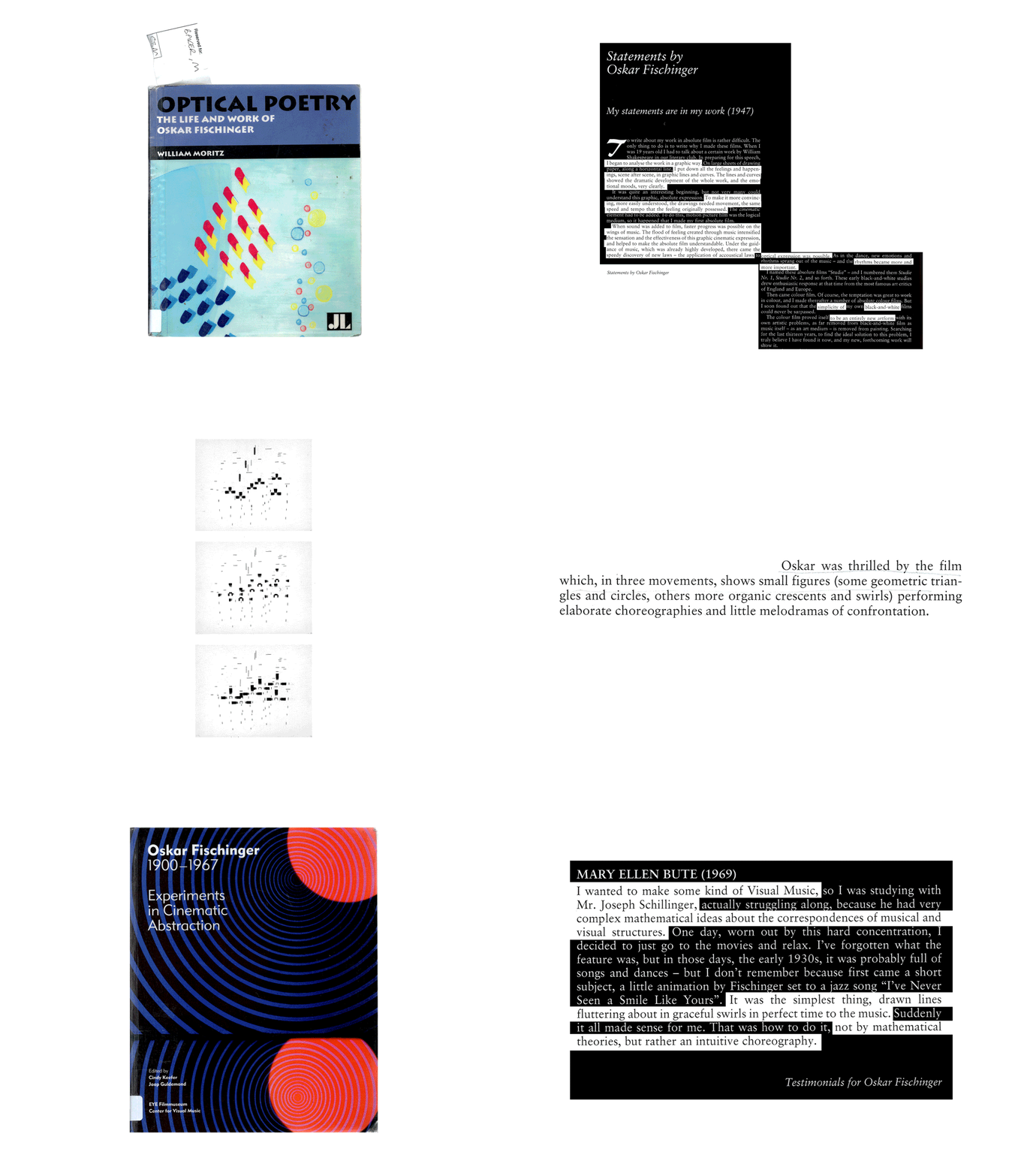
For the Methods of Iterating brief, I chose animation as my tool and Oskar Fischinger’s piece, Studie Nr. 7, as my source material. As a designer and musician, I have a particular interest in producing and engaging with work that explores the relationship between visual and sonic elements. I chose this piece in particular because it explores this relationship, in relation to form, depth and movement.
“Fischinger was a German-American animator, filmmaker, and painter who is best known for creating abstract animations that accompany music. Long before computer graphics, Fischinger spent months drawing on paper and cels as well as also meticulously hand-painting on glass and photographing each frame. He would then arrange them together to perfectly sync with musical compositions. The prolific artist made over 50 short films and painted around 800 canvases.”
– My Modern Met (2021)

1. replication: test
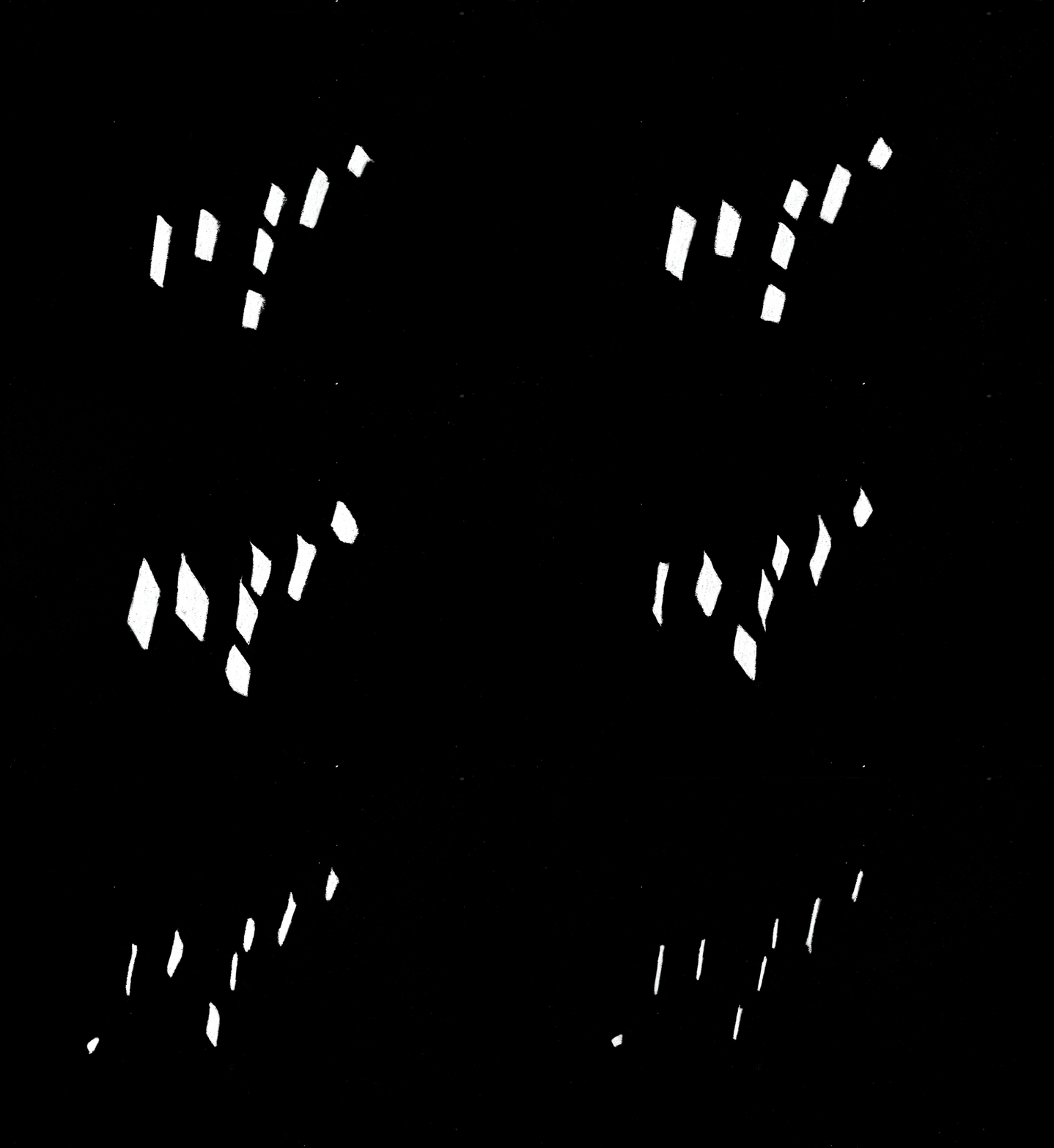
Oskar Fischinger created Studie. Nr. 7 by using charcoal and paper. Each frame was then photographed and inverted. In my initial approach to replicating this piece, I traced a single frame, a seed, and drew an entire sequence without any concrete measurements. I then scanned and inverted each page. The pages were sequenced using Photoshop.
Trace. Interpret. Draw. Scan. Sequence.
By focusing on a very brief section of the animation, I was able to quickly test this approach, which highlighted what was working and what could be improved. It was evident that I needed to achieve more precise replications of each frame. Without a measured reference, interpretation became a liability.
2. Replication: execution
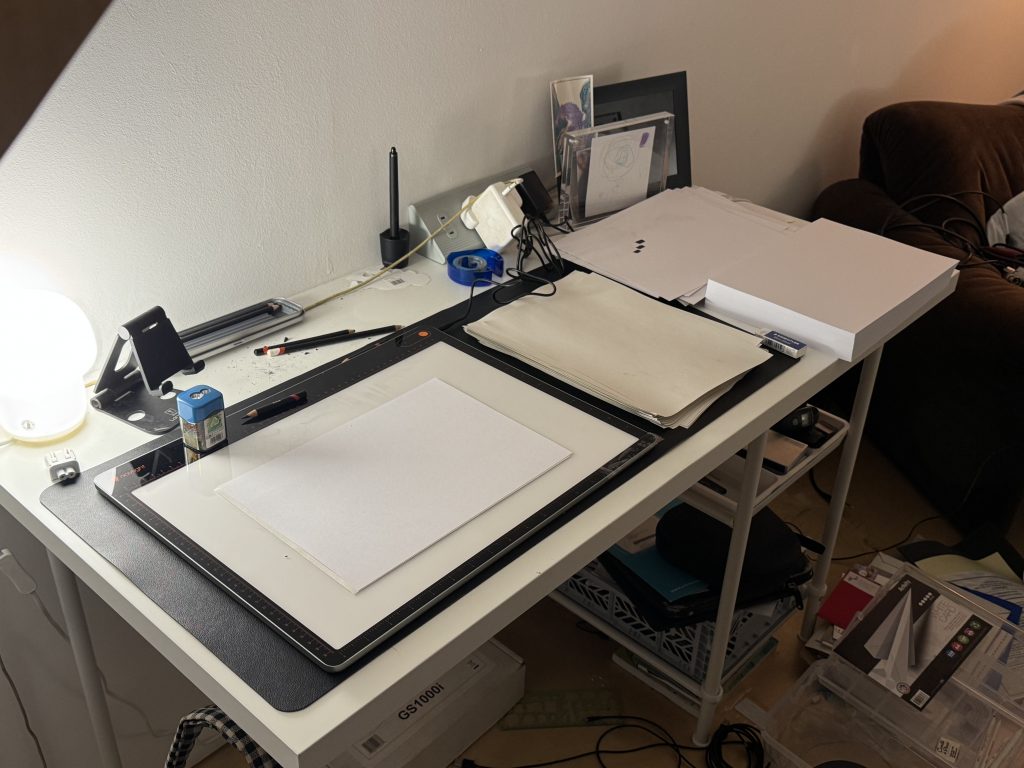
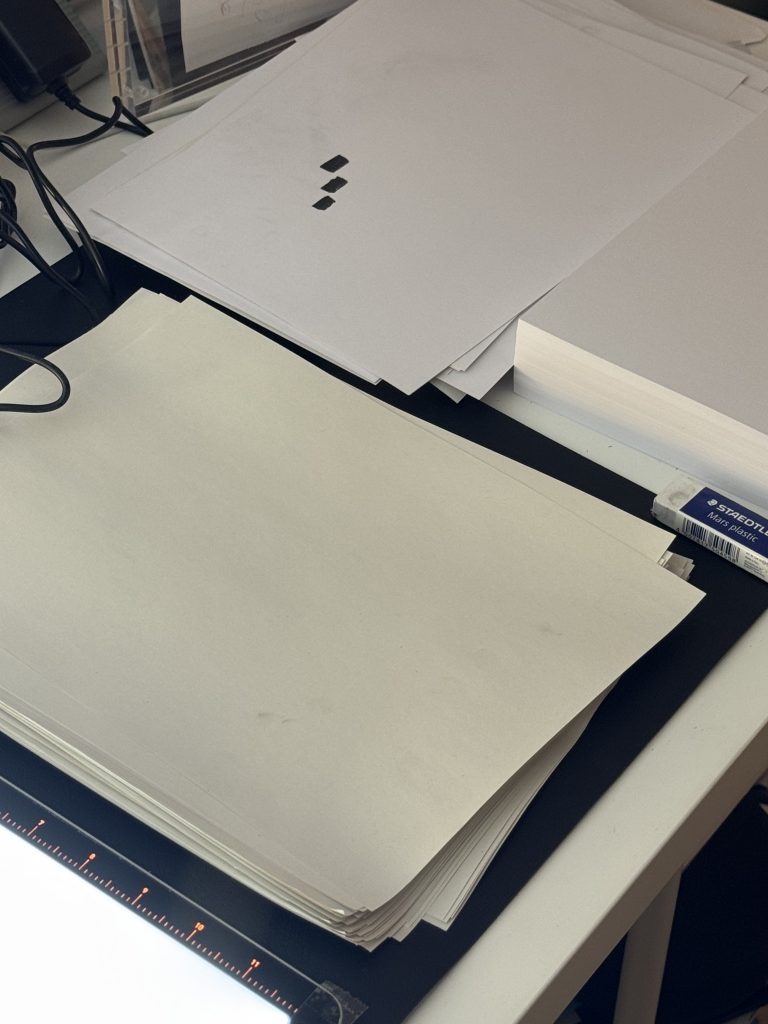
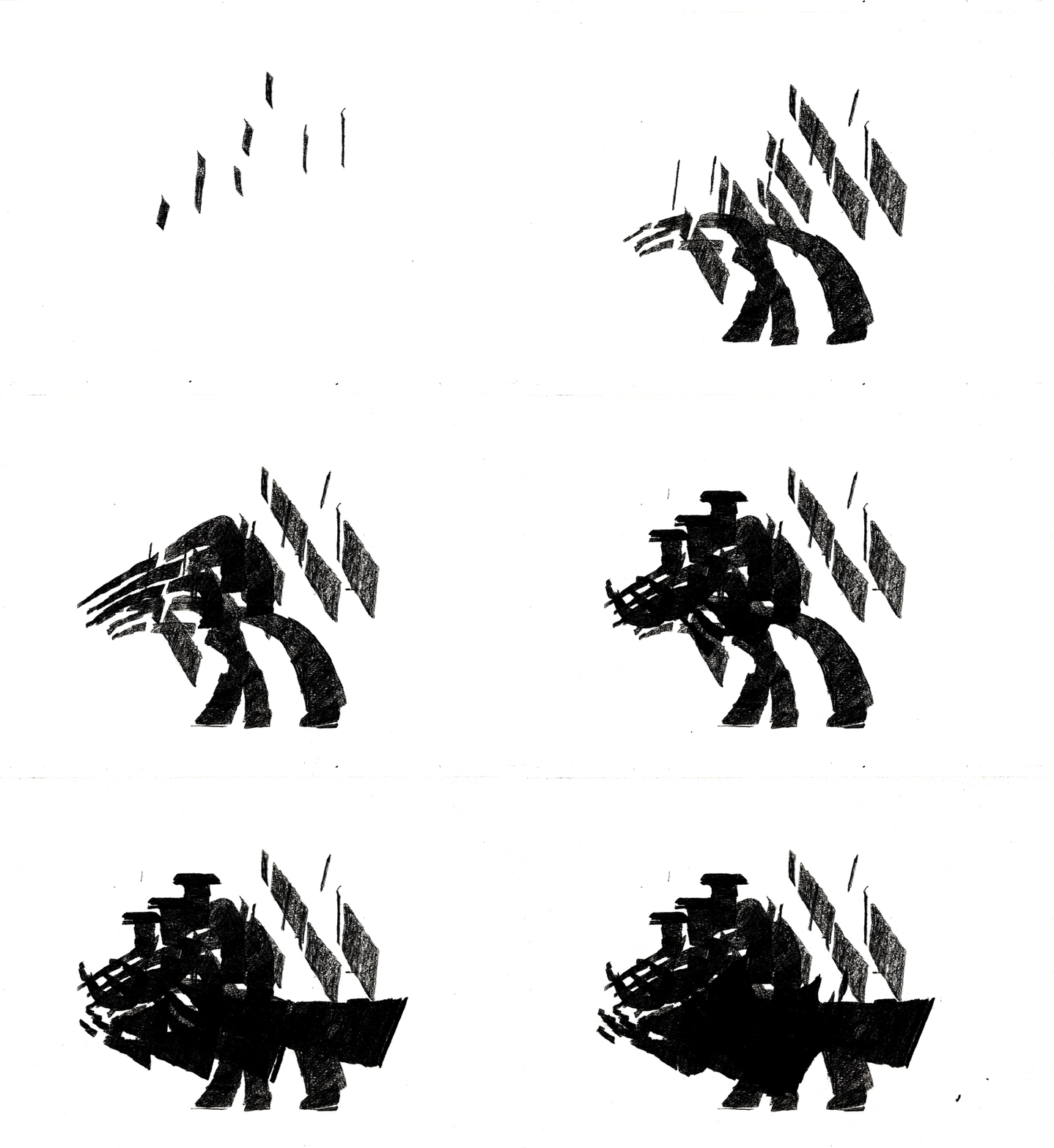
For the second iteration of the replication phase, I printed and traced one hundred and sixty-five frames.
Trace 165x. Scan. Sequence.
By increasing the accuracy and the number of frames, the process became highly repetitive. There was a mechanical sort of continuity taking shape. In this iteration, a system started to form.
3. Ai MATERIAL Synthesis
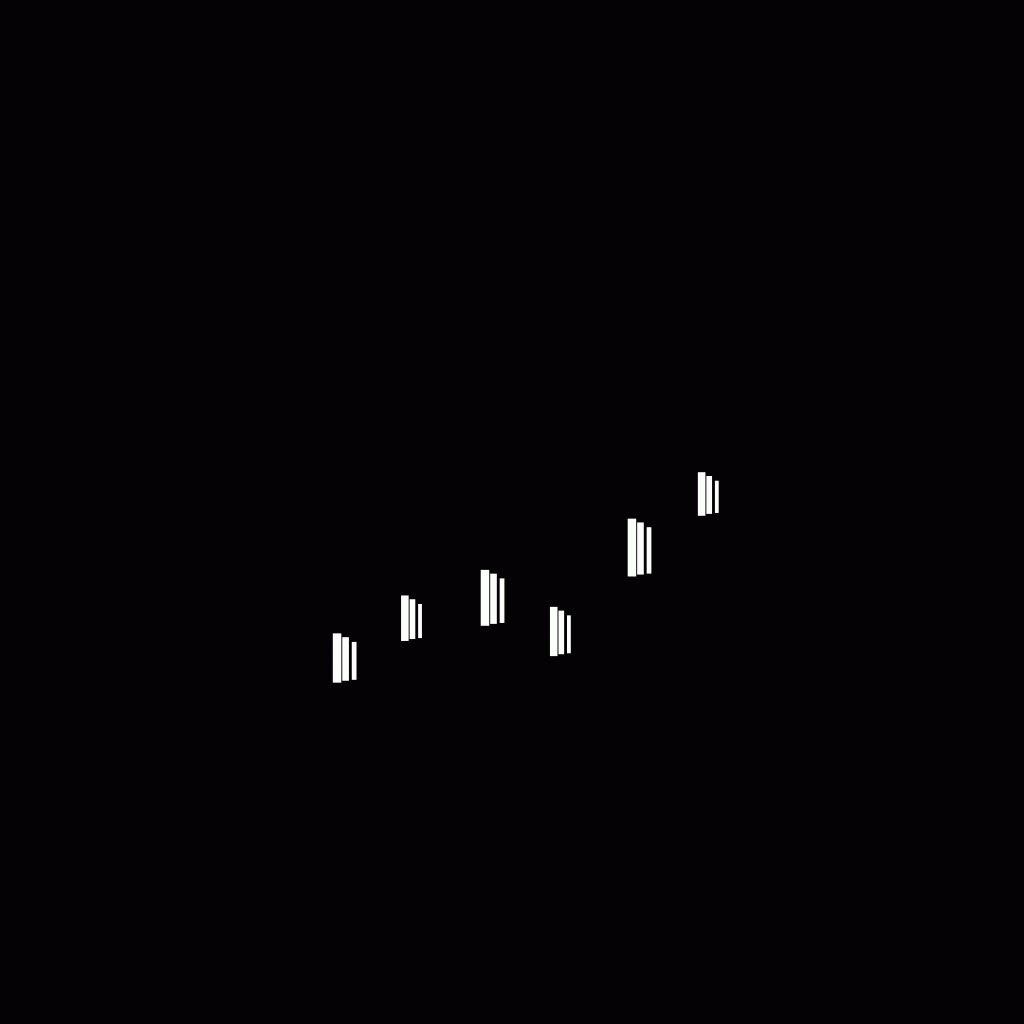
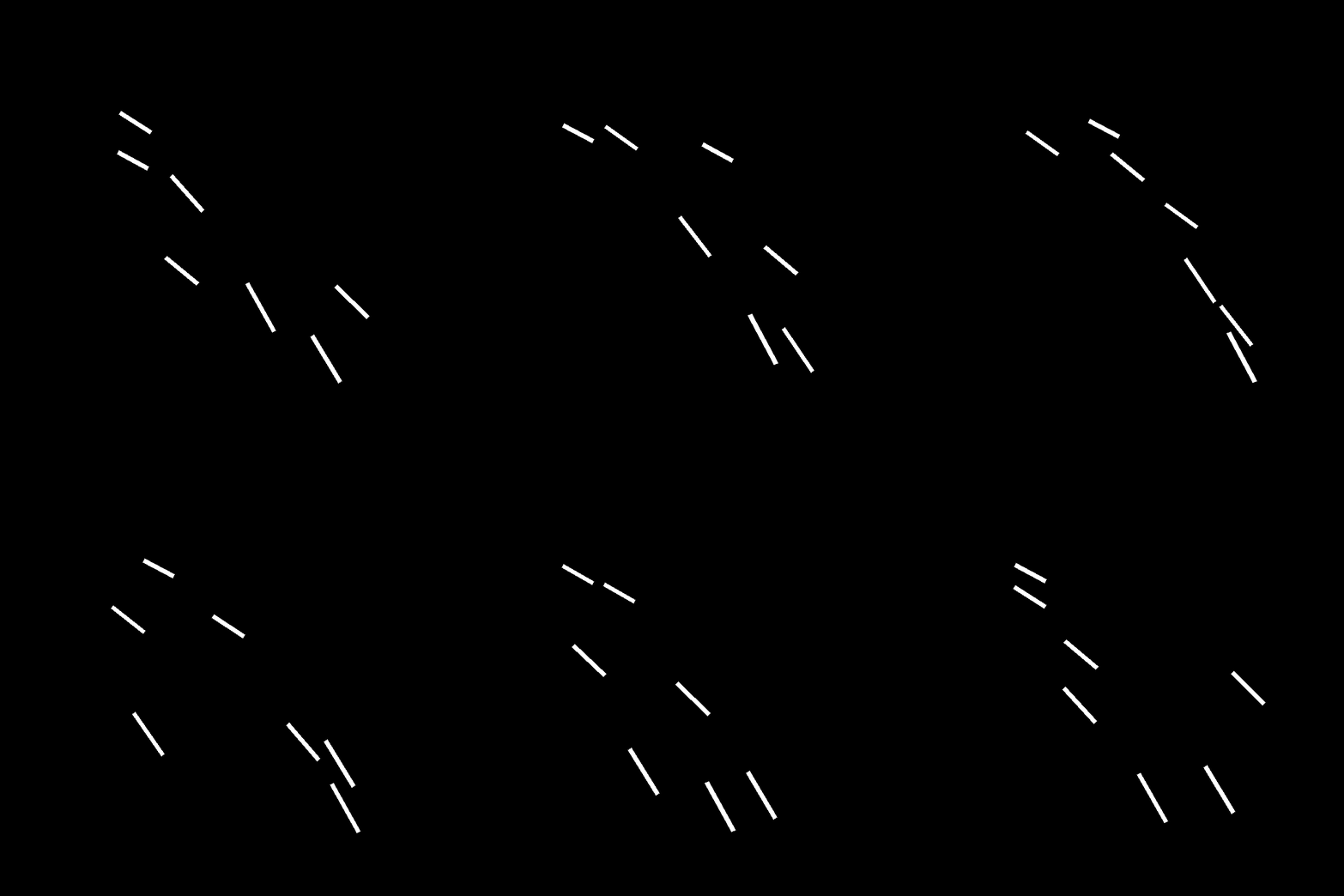
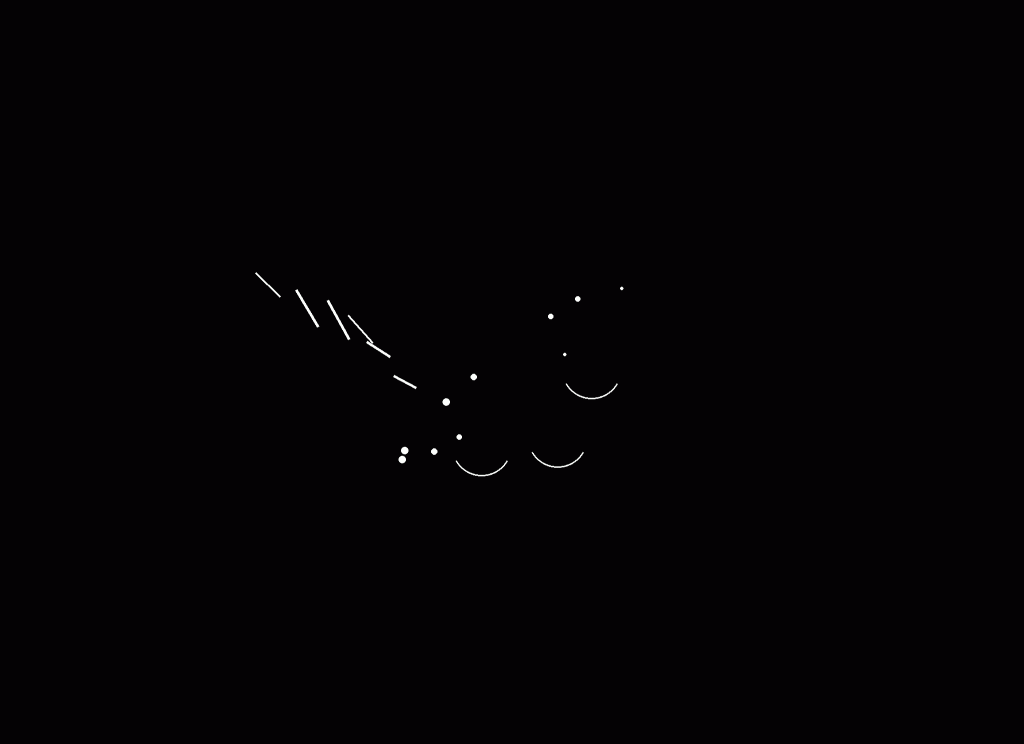
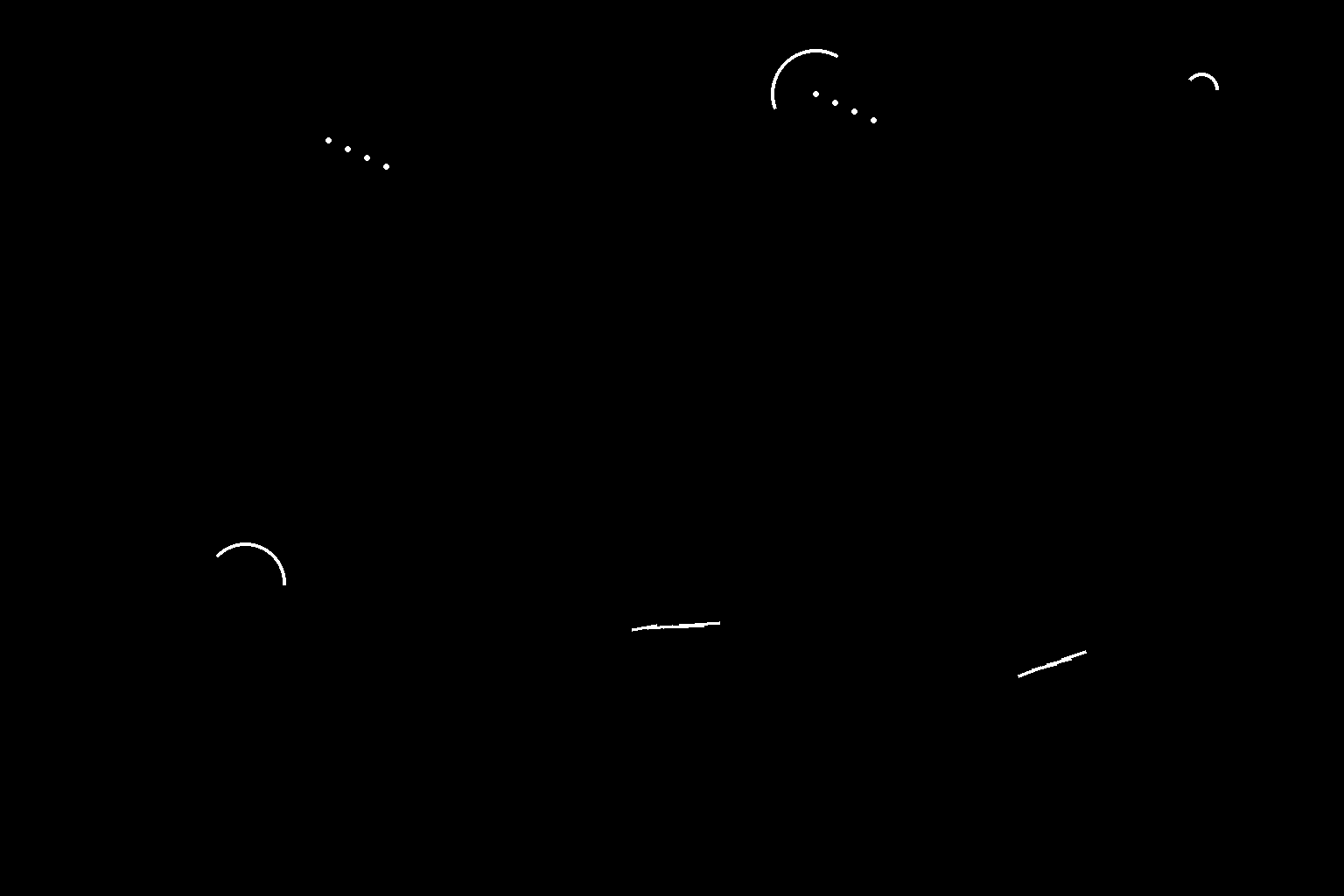
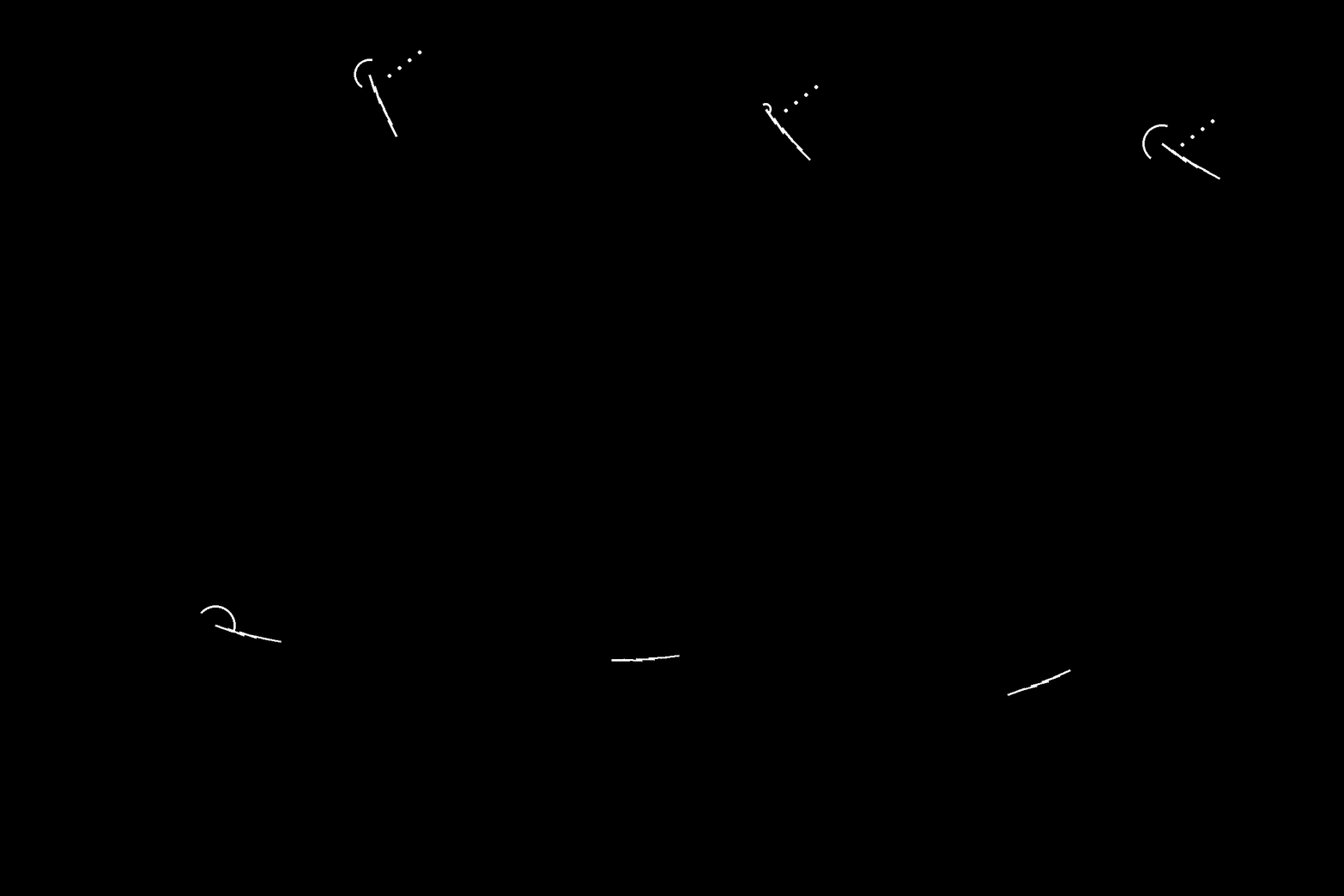
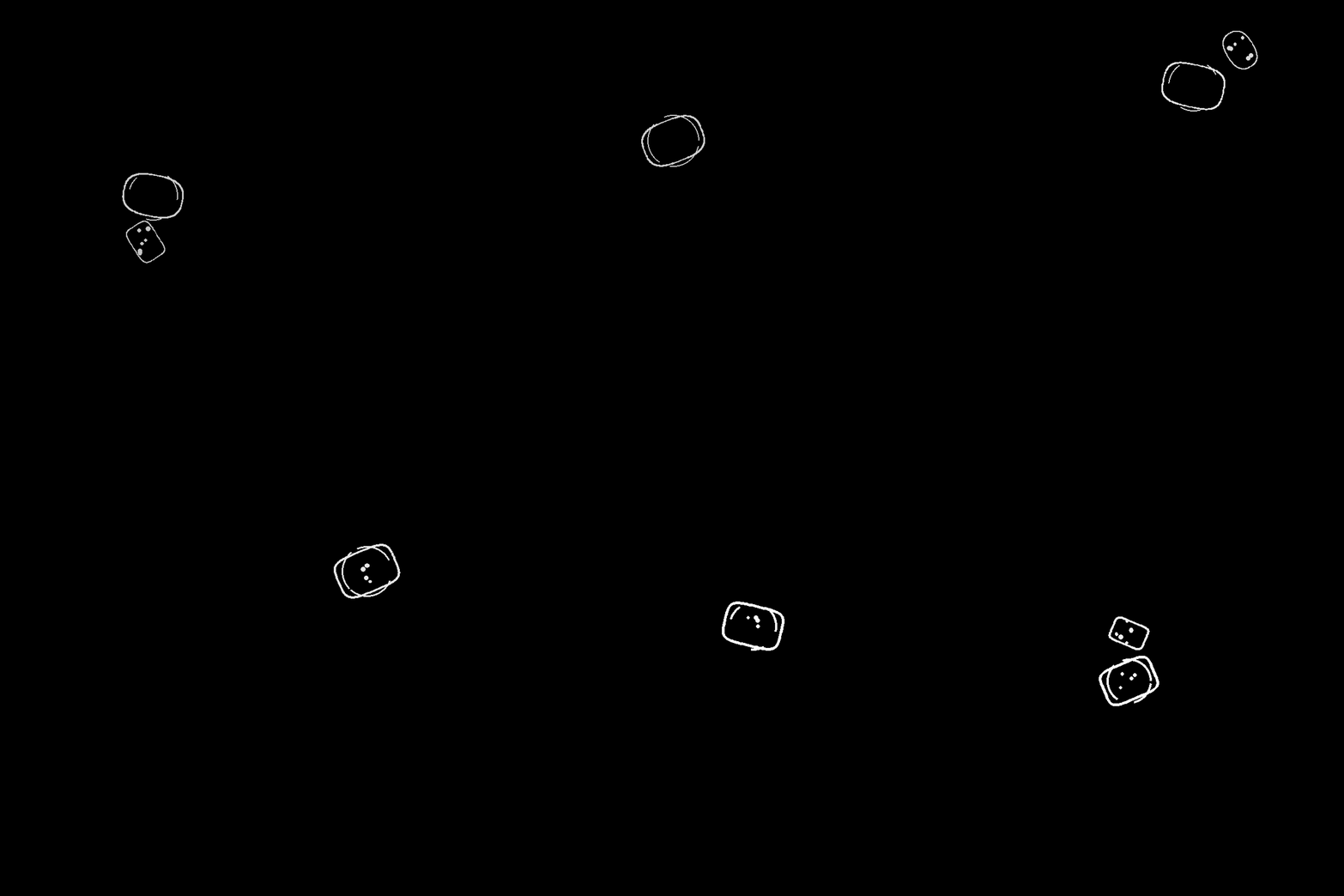
While considering ways to hack this process, I was curious about how AI might replicate Studie Nr. 7. I specifically asked if it could output frames rather than something already animated, to align with the method that I had already developed. The results were extremely varied, but they all lacked depth, fidelity and character. The more detail I requested, the simpler the animations became. The process changed drastically.
Input Source Material. Write Prompt. Sequence.
Through this, I clarified my position regarding AI as a tool for animation. The way in which ChatGPT synthesized the source material effectively stripped the humanistic elements about Fischinger’s work that make it artistically and historically valuable. While other AI agents may be more effective, or perhaps designed to animate, I find significant meaning in the effort and sensitivity it requires to create using human hands and methods.








4. MEDIUM TRANSFER
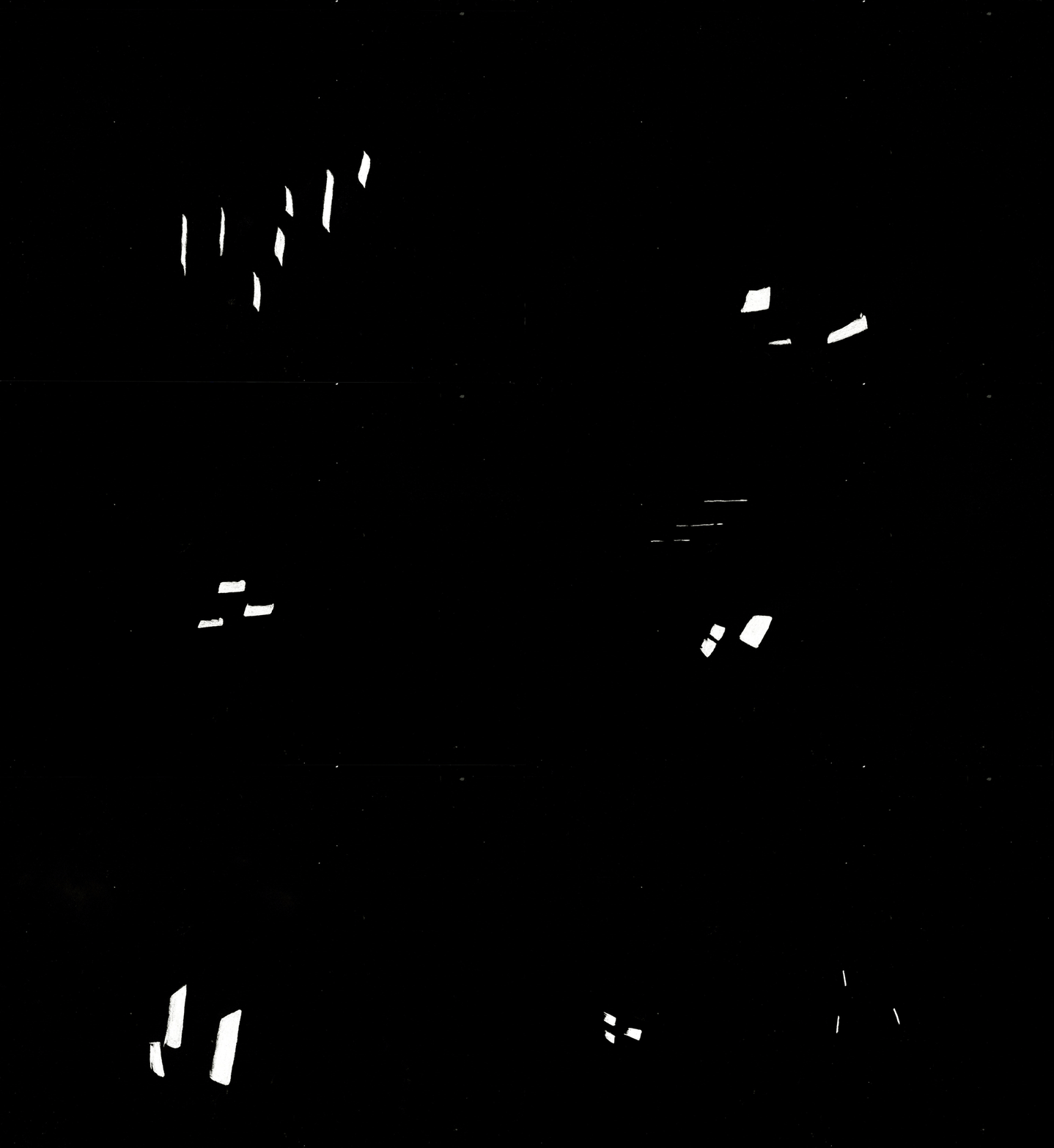
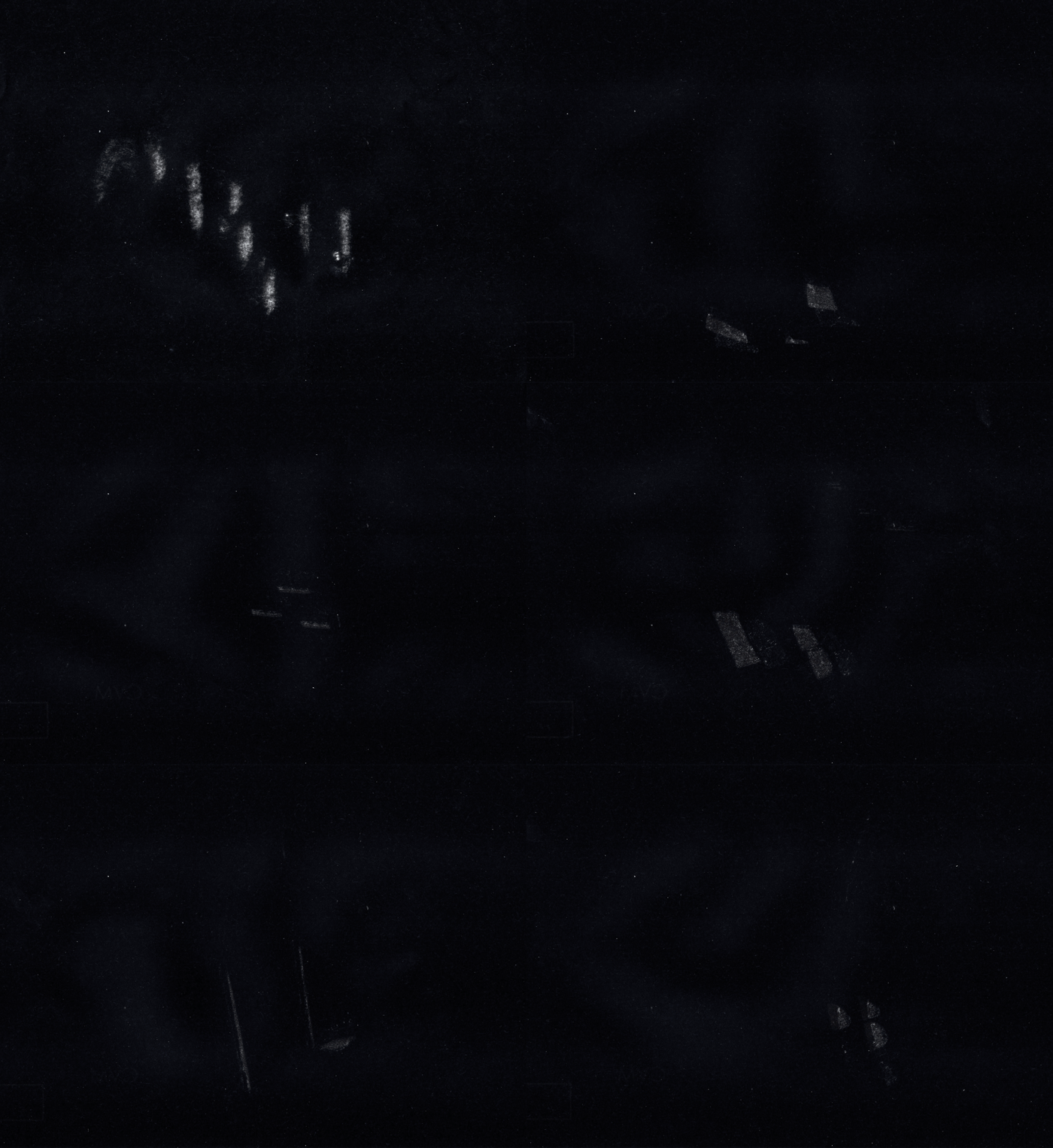
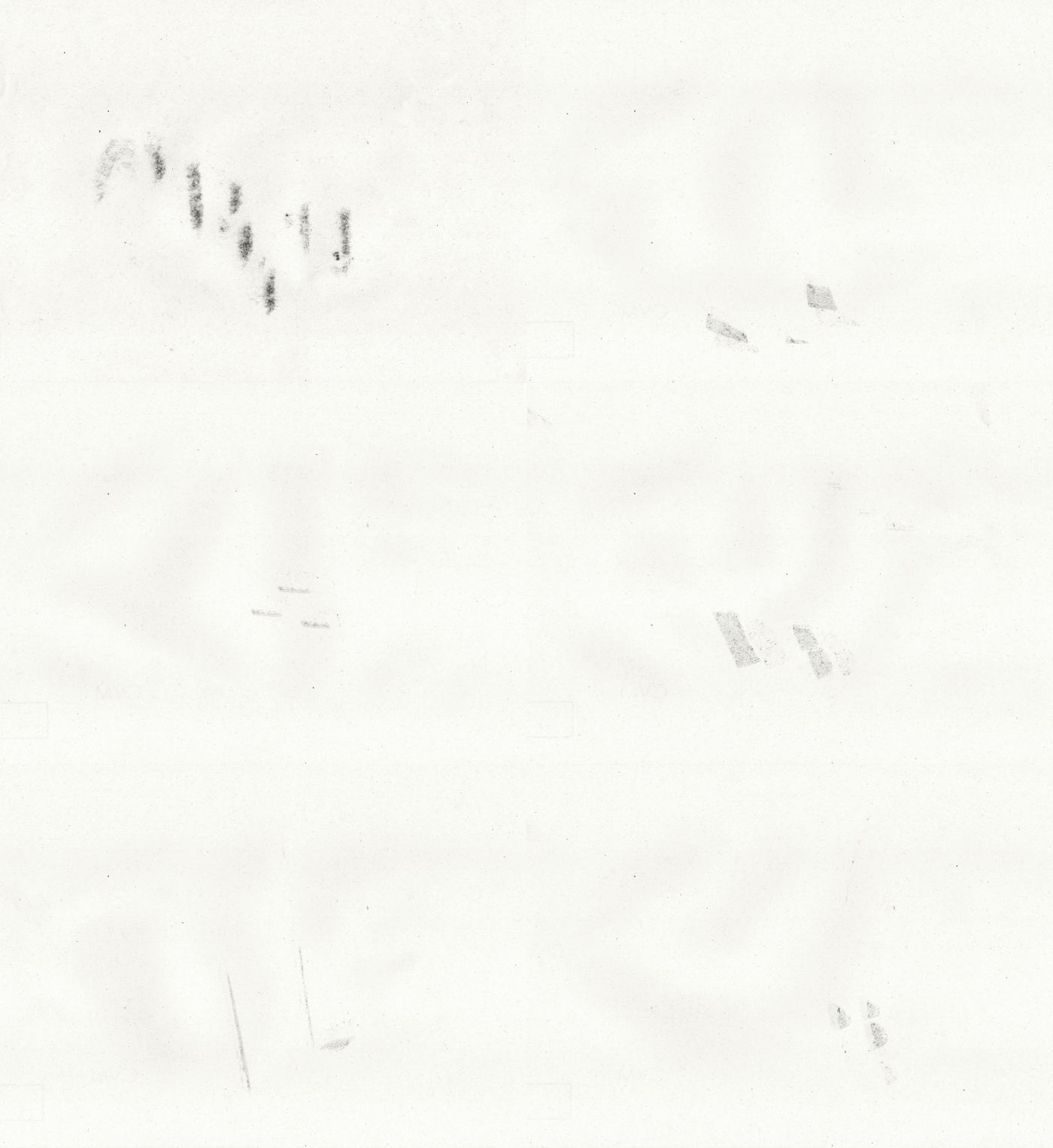
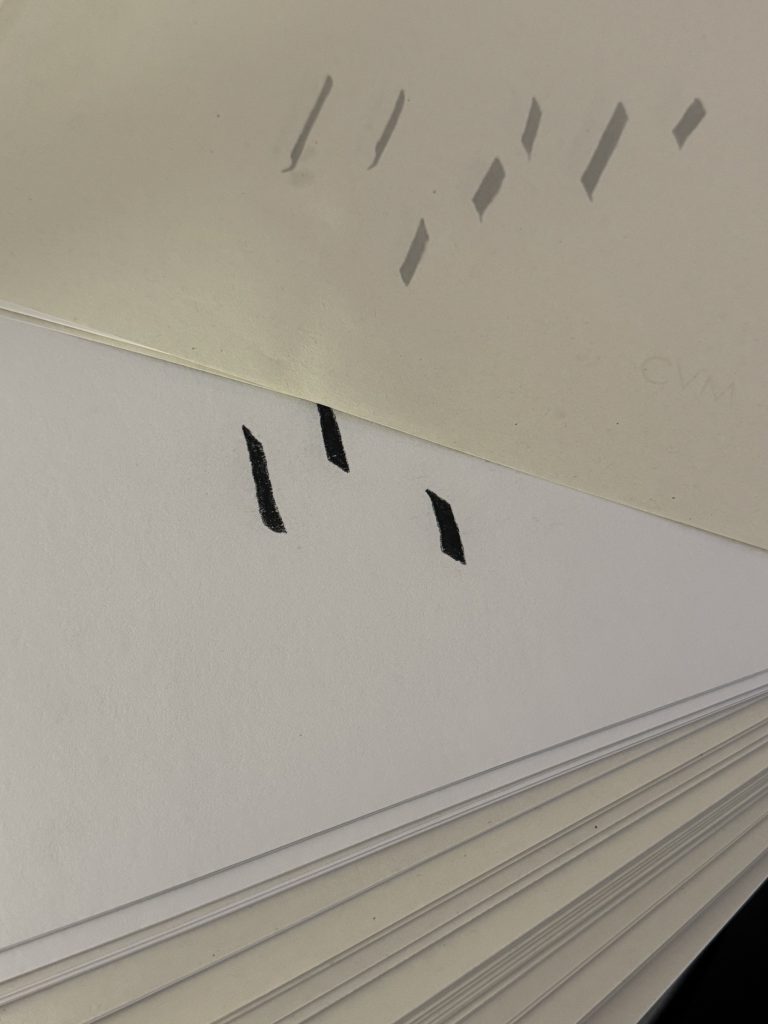
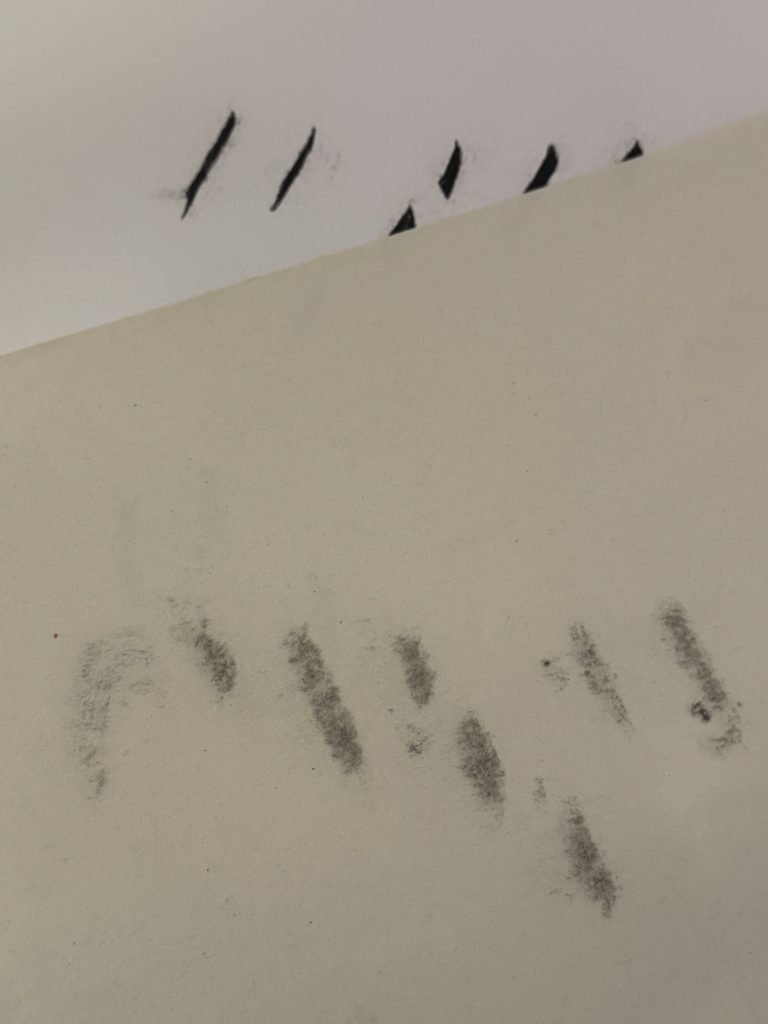
As I commuted to and from University, I carried the physical stack of frames with me. I noticed that as they were carried, the charcoal had transferred onto the preceding page within the stack. For this iteration, I scanned these pages instead.
Trace 165x. Carry. Scan. Sequence.
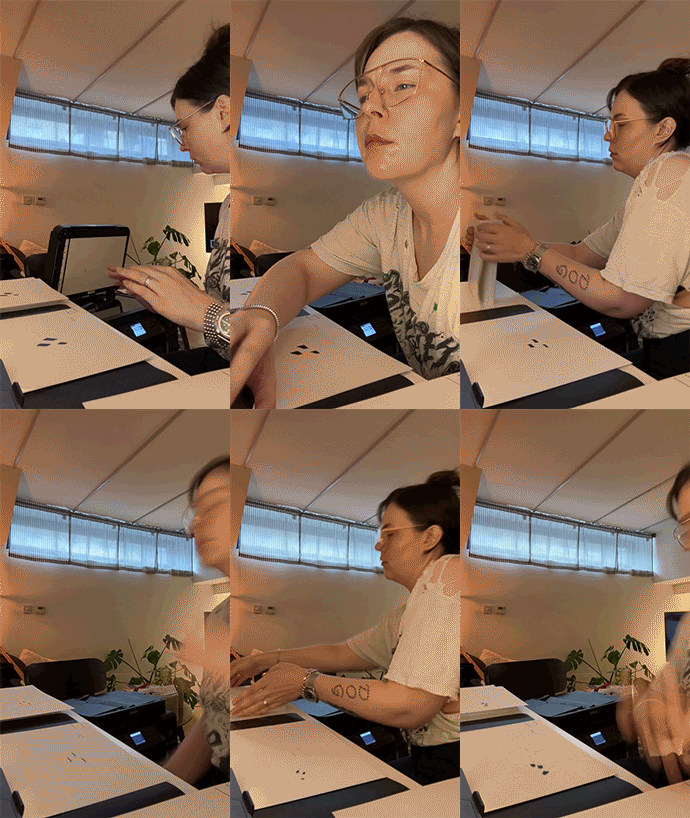
As I scanned each frame, I recorded the sounds produced by this process, one at the regular speed, and another edited at a faster pace for the sake of pattern recognition. These sounds could be used as an analytical lens to consider the repetitious and mechanical aspects of the method.
I began to explore critical findings with greater depth at this point, recognizing that there was a historical narrative inherent to each marking scanned during this iteration. Through this transfer, new forms were developing, with new information contained within them.
5. INTERPRETATION
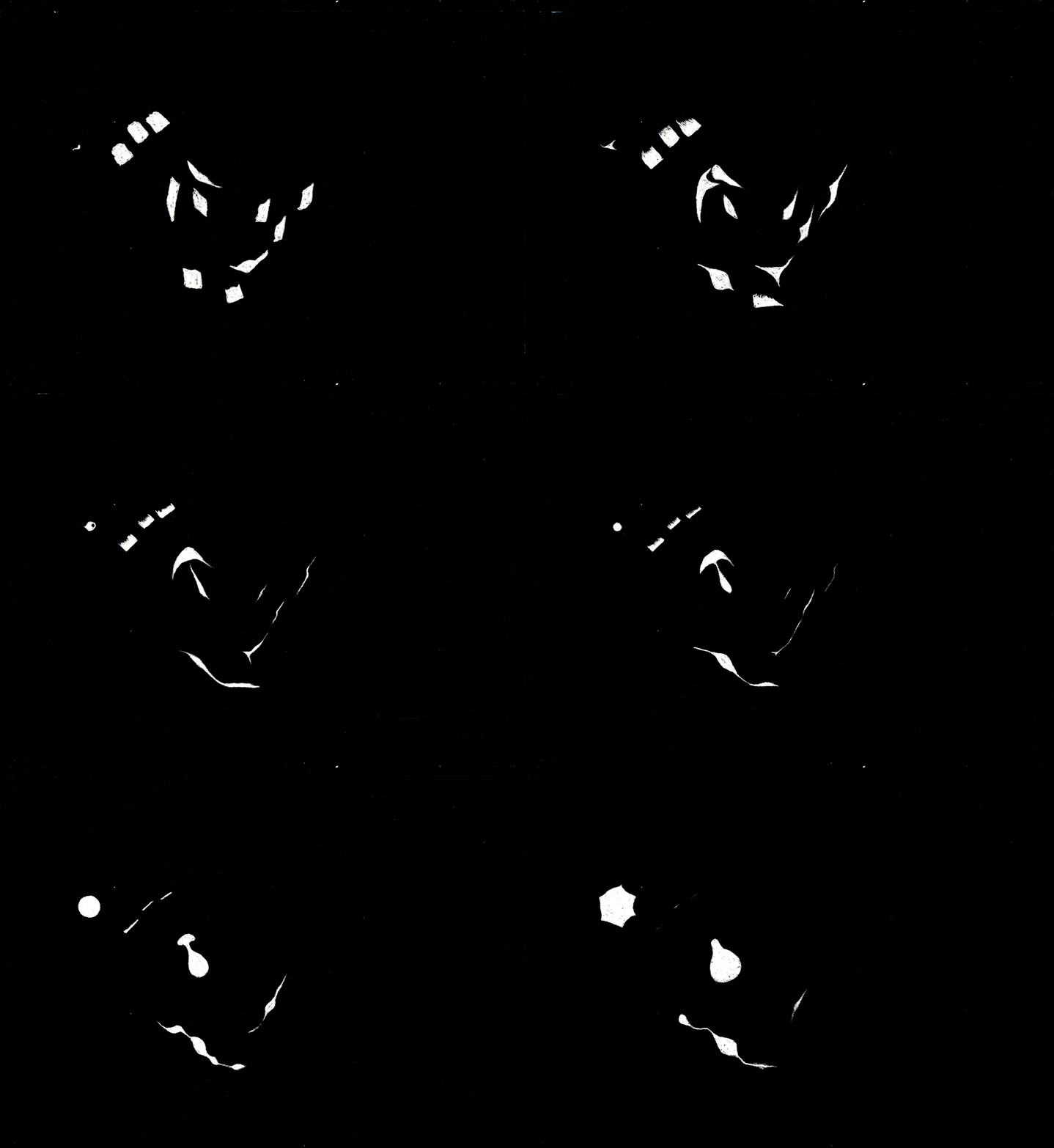
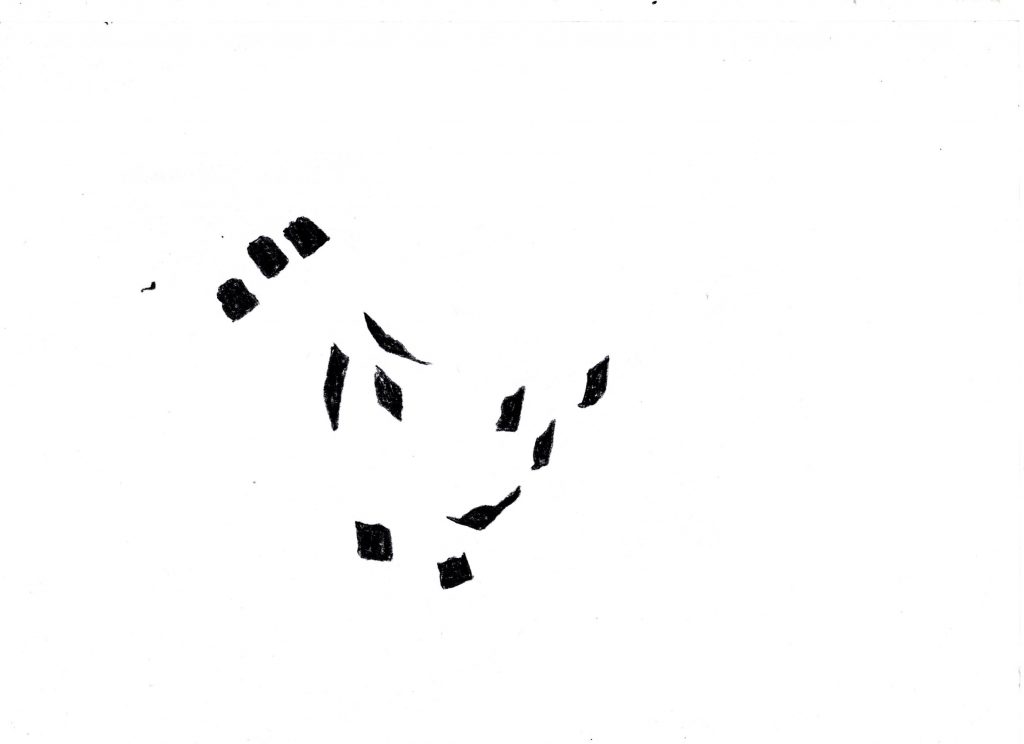
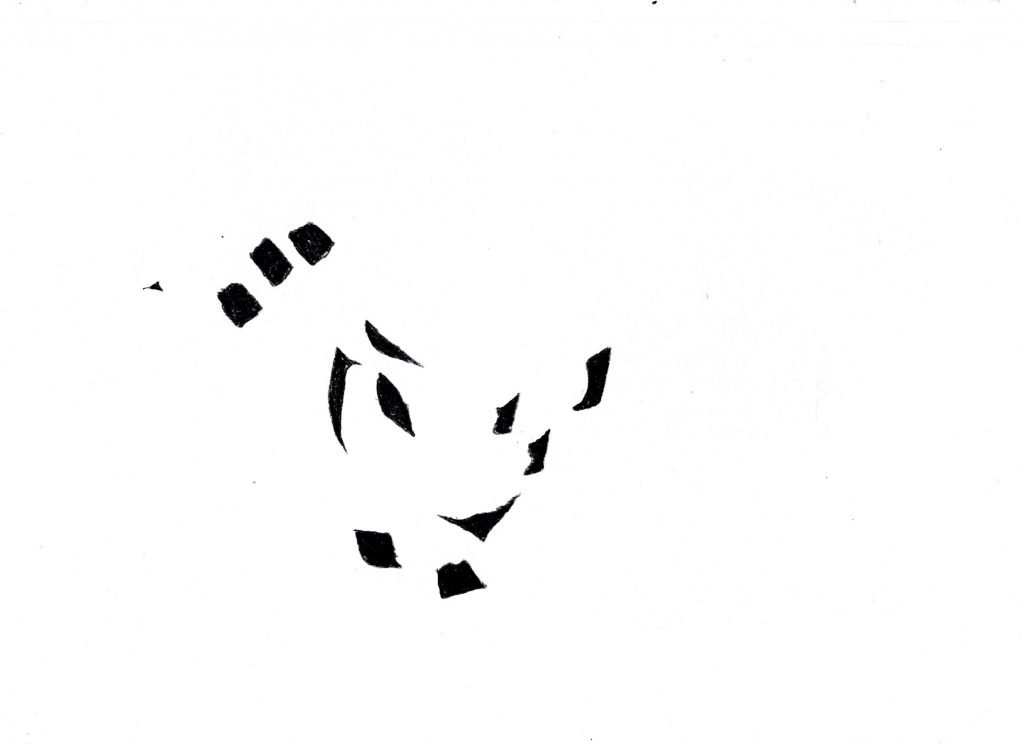
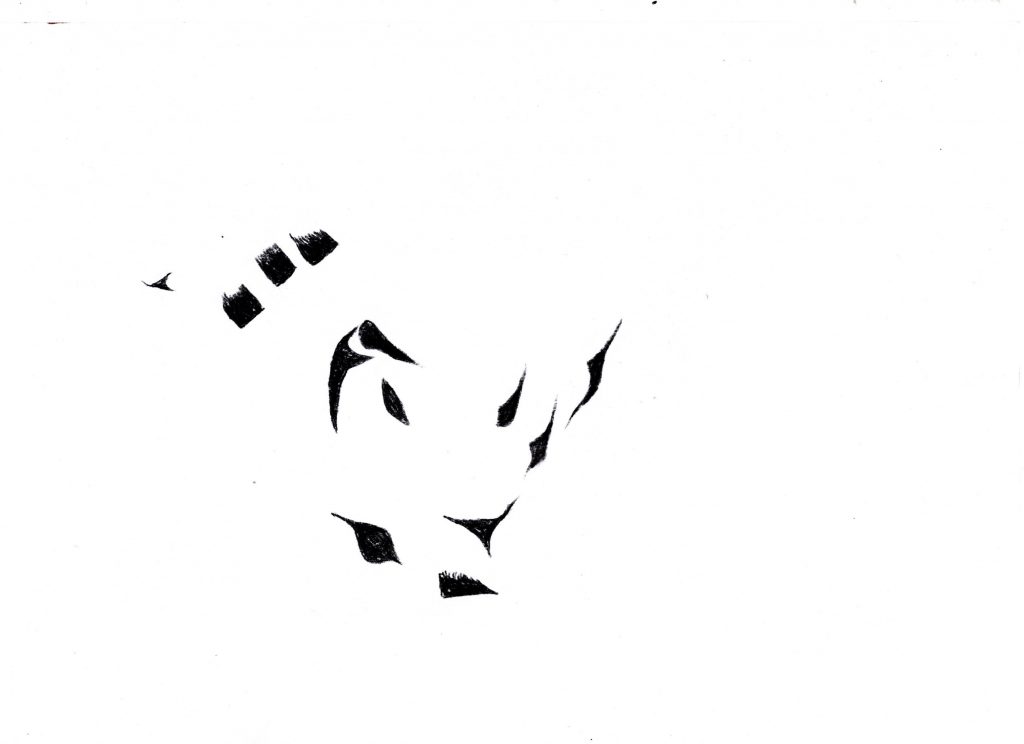
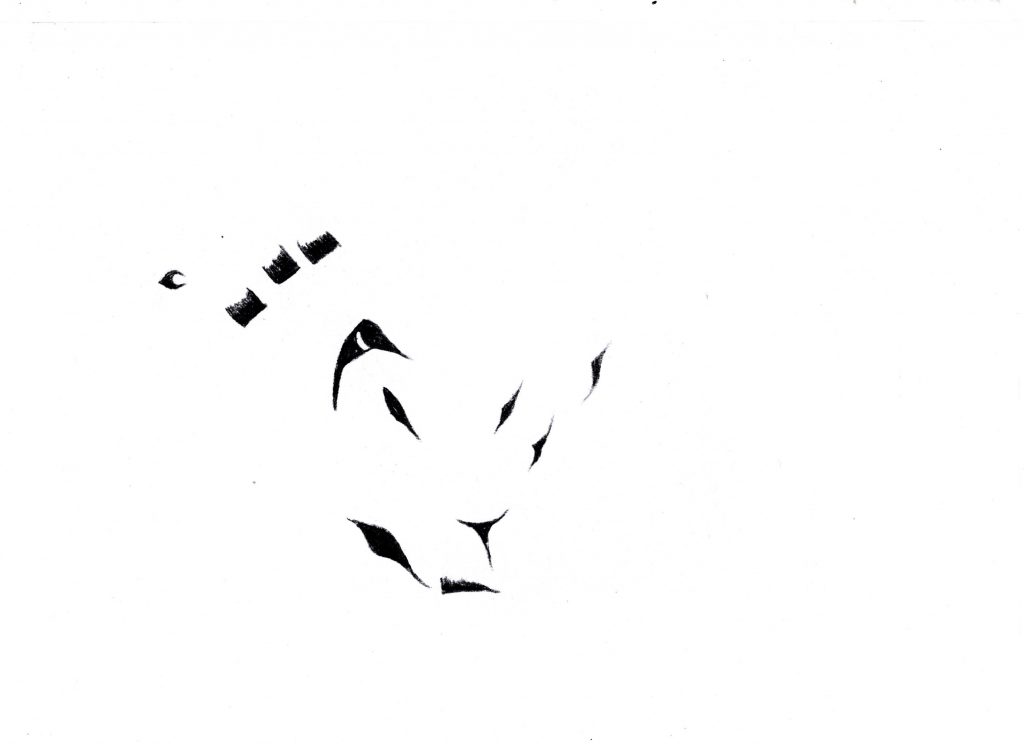
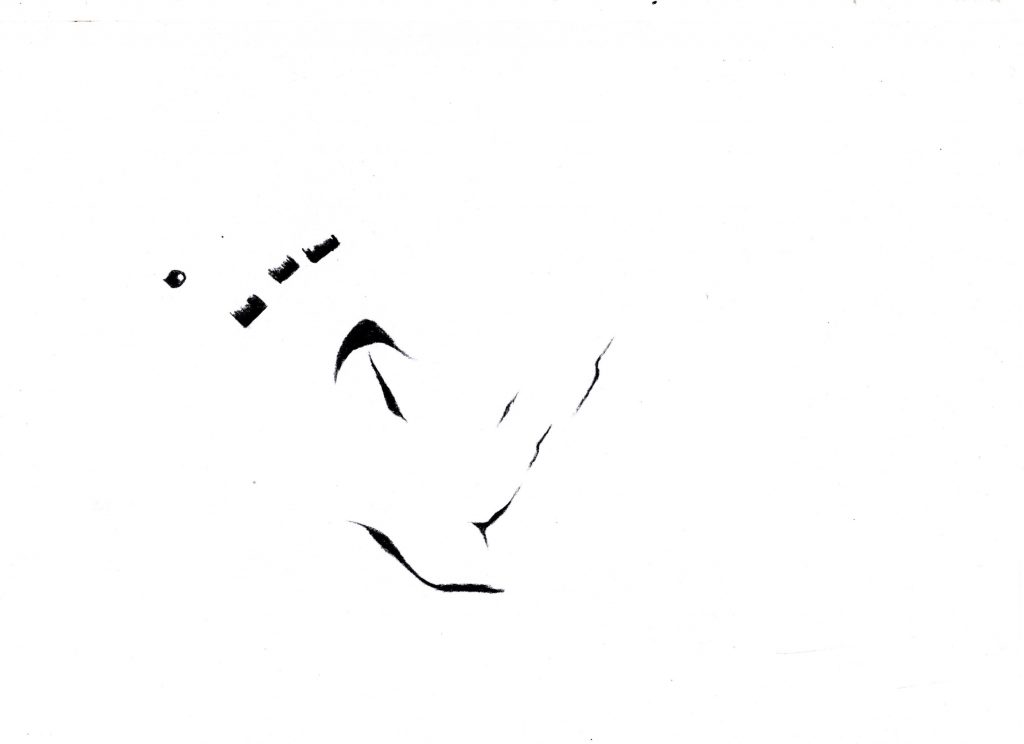
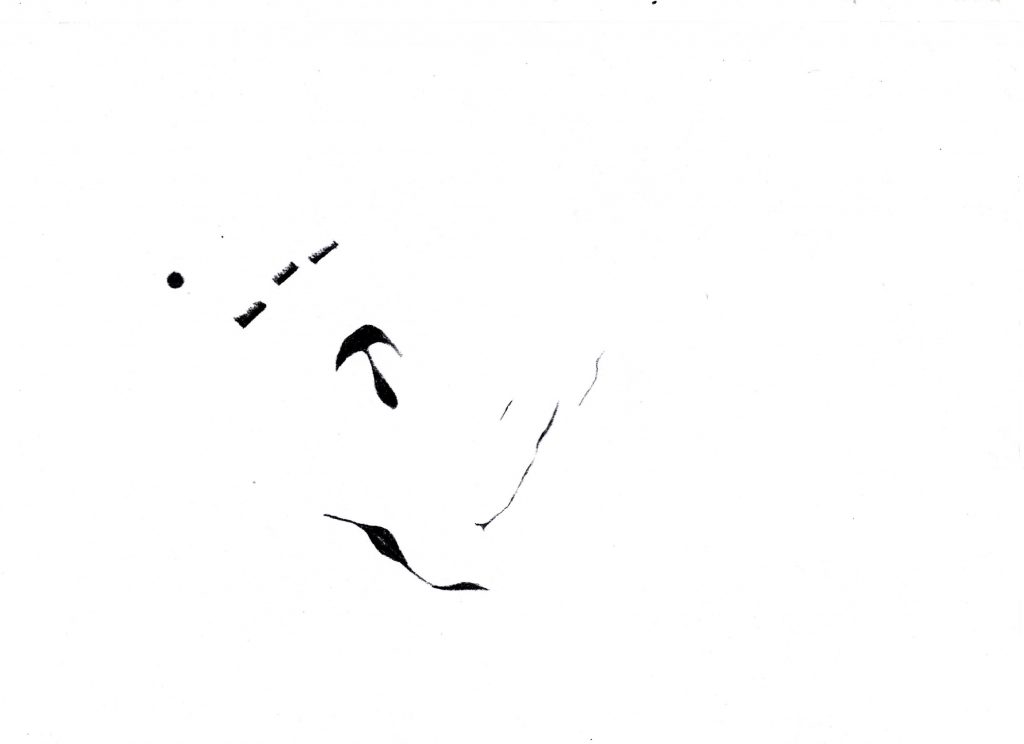
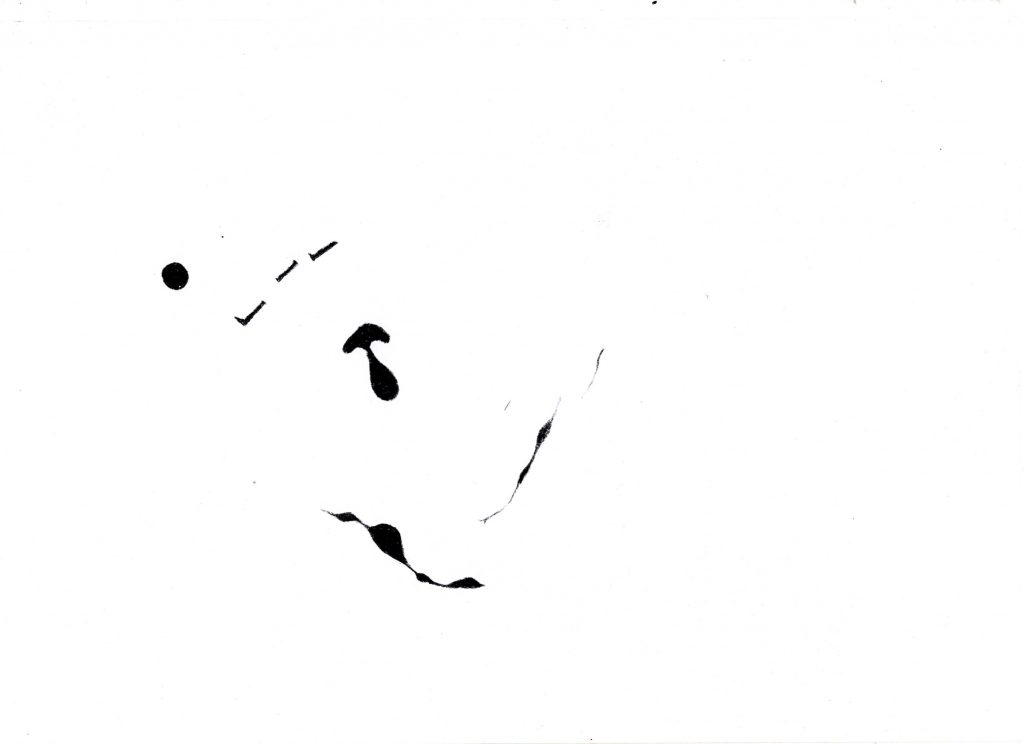
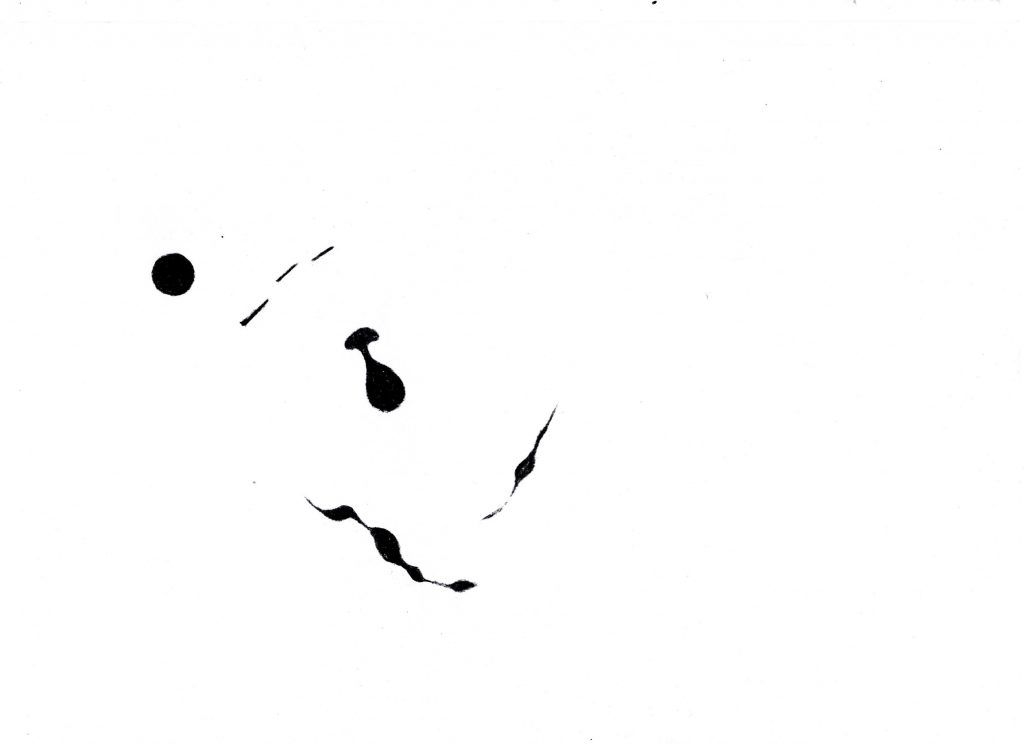
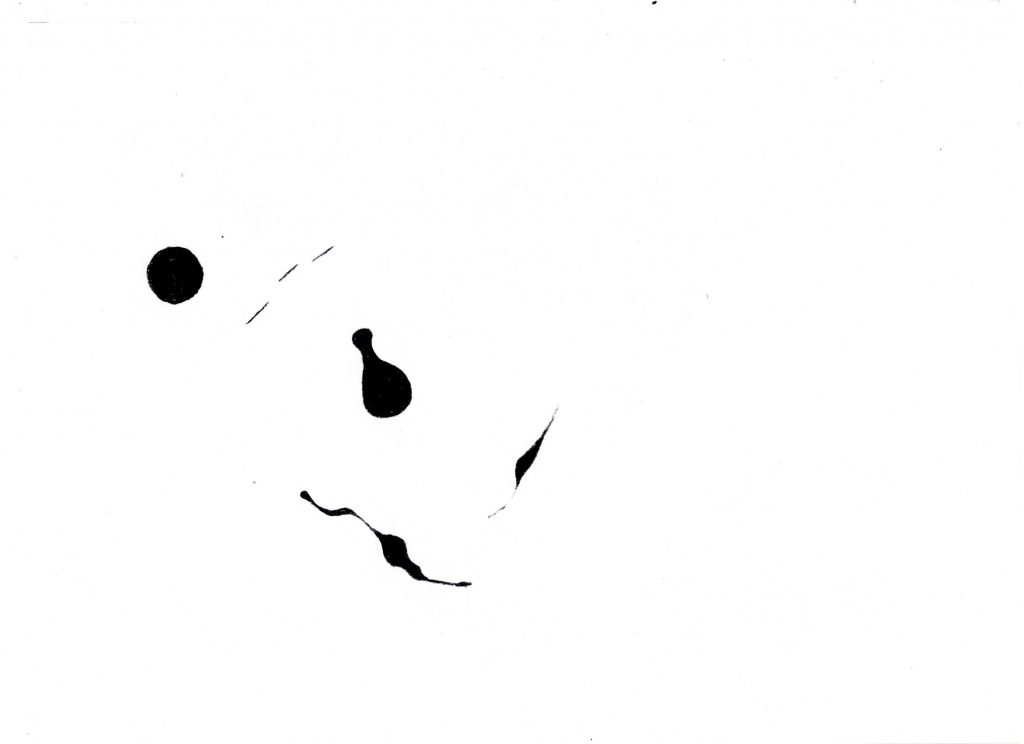
For the fifth iteration, interpretation was a key factor. I selected a random frame, or seed, and intuitively drew a progression of frames based on what I had learned from Fischinger’s process about movement, scale, depth, form and sequence.
Trace. Ideate. Draw. Scan. Sequence.
Despite being only 2 seconds, this iteration took the longest, per frame. It also felt overly interpretative without a sufficient conceptual spine.
6. UNIFIED MARKINGS
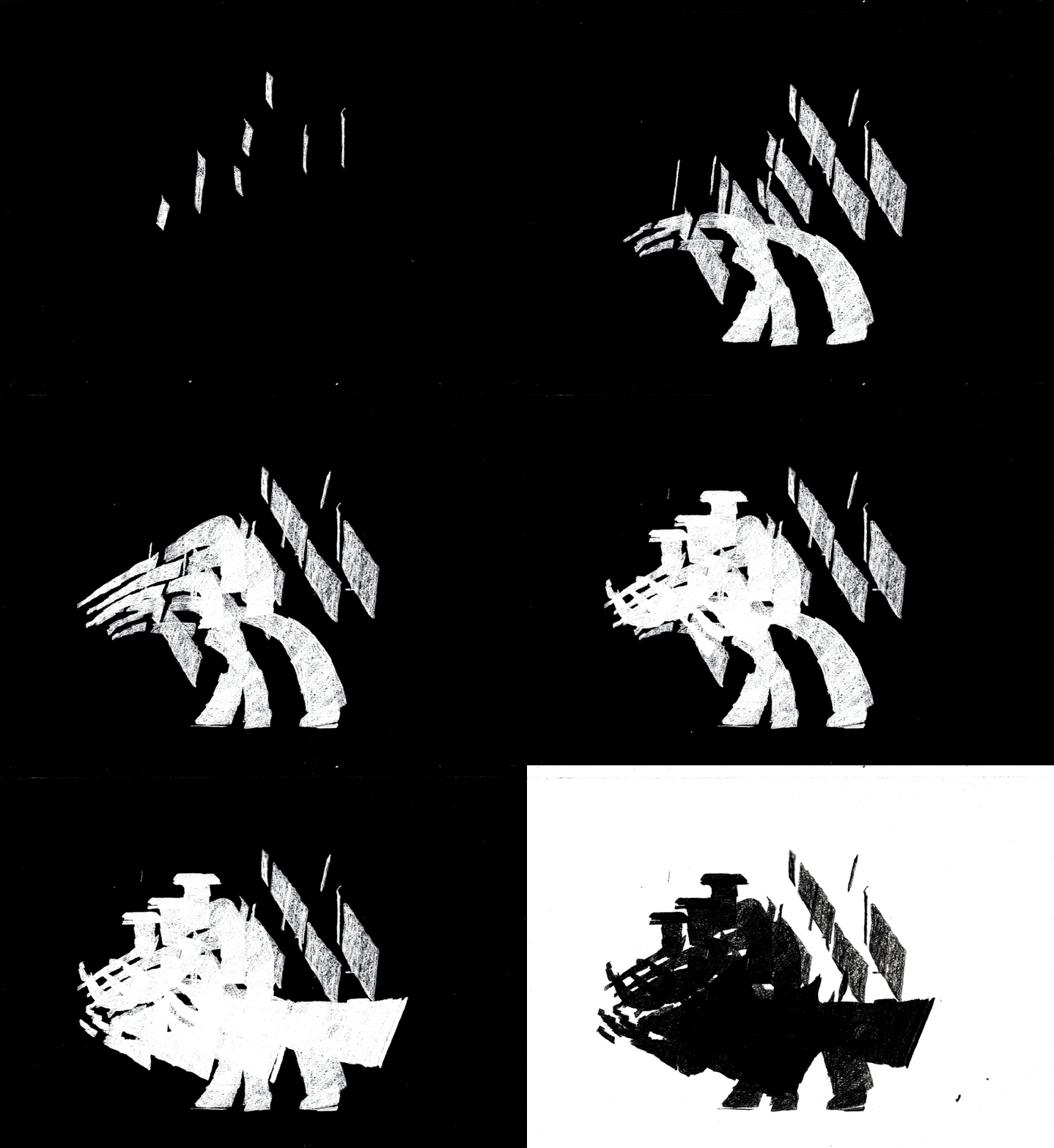
For the final week of Methods of Iterating, I focused my attention on exploring how the charcoal markings had transferred, and what hidden findings I could expand upon.
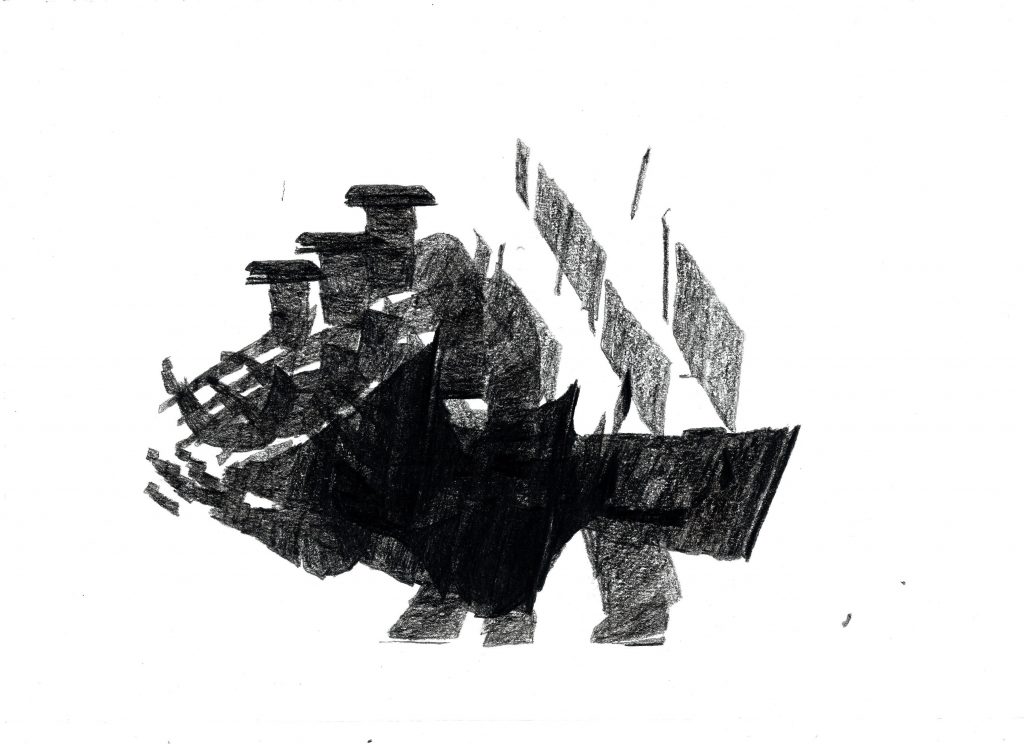
I wanted to elaborate on how the sequencing of these frames also contained a kind of history. Rather than animate each frame individually, I compiled all of the frames on a singular page, unifying the markings.
Draw. Scan. Repeat 165x. Sequence.
The result was deeply linked to the fourth iteration, medium transfer. This piece also produced a new form, in part because every frame was visible simultaneously, but also because I had made a mistake. After reviewing the sequenced animation, I noticed that I had flipped the page and continued the animation upside down.
Key Findings
As I’ve been reviewing this project, I considered how the forms produced by the shifting variables in each iteration altered the meaning of each outcome. Every iteration exists, effectively, as both a static and dynamic record of the conditions that produced it.
Artificial synthesis. Interpretation. Translation. Dust. Friction. Sonic output. Accumulation. Error.
Moving Forward
Project Continuation: Sonic TRANSLATIONS
Throughout my work for this brief, I focused on replicating the animation, given that it was my tool of choice. Exploring ways in which I could reintegrate sound has been a critical consideration as I reflect on how I’d like to contextualize this project within my practice moving forward.
Fischinger’s process was centered around animating scores that he was provided. For this iteration, instead of replicating the visual elements frame by frame, my intention is to replicate the sound. I collaborated with Andrea Balency-Béarn, a PhD student at the Royal Academy of Music, to score a different animation in the Studie series, Studie No. 8 – which is, importantly, one that I don’t know frame by frame.
Andrea interpreted the animation sonically. I intend to animate the score without referencing the original piece, mirroring Fischinger’s practice. The process as a whole will act as a kind of translation.
As I continue to define the purpose of this experiment, I’ll be considering whether the medium – charcoal and paper or the method – scanning and sequencing, should be utilized or if the model warrants a departure entirely.
Additionally, Andrea scored the animation used in my written task, extracting the audio recorded during the scanning process. I implemented this score into the written task, viewable below the recording.
PROJECTED PRACTICE
I’ve continued to pay close attention to recurring themes in my research, material selection, studio work, and most importantly, the enquiries that surface through my practice. A major theme that I return to is the relationship between sound and image.
- What can a line communicate? [Methods of Investigating, ref. graphic scores, John Cage & Cornelius Cardew]
- How can something graphic communicate something sonic?
- How can something sonic communicate something graphic?
- What conditions affect the legibility of a sonic score and who can read it?
- How can graphic languages be adapted or altered to develop new methods of translating sonic grammar?
- What tethers sound and image: what can be shared, translated or needs to be bridged?
- What conventions pertaining to the relationship between sound and image can be disrupted by exploring perceptual correlations like synchronization, dynamics, material, narrative or foundational structures?
- How does the material, tool, context or language enhance or challenge this dynamic?
- How can animation be used as a tool to produce new methods of visualizing sound?
- How can sounds produced through making be used to inform, alter or challenge visual methods?
- How is meaning changed when the visual elements are dictated by sonic variables instead of visual ones?
Through my feedback at the midpoint assessment, I learned that my approach has been too direct and often felt outcome based. Methods of Iterating marked a pivotal shift in the trajectory of my focus moving forward. This work, in particular, emphasized the value of knowledge production through experimental making. More concisely, I’m learning how to ask bigger questions, decipher complex meanings and recognize value that I may have previously overlooked.
I’ve enrolled in two courses through School of Song that are intended for songwriters, taught by Daniel Lopatin (Oneohtrix Point Never) and Alejandra Ghersi (Arca). The curriculum for both classes take a practical, philosophical and expansive approach to music production and sonic thinking. Broadening my educational approach, in unison with continuing my research and studio practice, will be pivotal in further developing these areas of enquiry that I intend to explore.
Leave a Reply